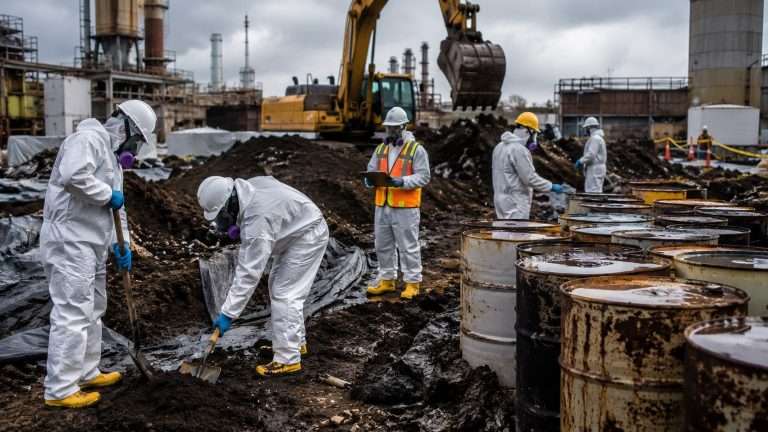
Most workers have heard the term HAZWOPER, but many are unsure exactly what OSHA requires, who must be trained, and how employers determine whether a worker needs 24-Hour or 40-Hour HAZWOPER training.
The Occupational Safety and Health Administration (OSHA) created the Hazardous Waste Operations and Emergency Response (HAZWOPER) standard to protect workers who may be exposed to hazardous substances during cleanup operations, waste treatment activities, emergency response incidents, and other high-risk environments. The regulation establishes detailed requirements for training, personal protective equipment, medical surveillance, site safety planning, and emergency preparedness.
For employers, understanding HAZWOPER requirements is essential for maintaining compliance with OSHA regulations and protecting workers from potentially life-threatening exposures. For workers, understanding these requirements helps ensure they receive the proper training before entering hazardous environments.
This guide explains OSHA HAZWOPER training requirements in plain language, including who needs training, which training course is required, refresher obligations, employer responsibilities, and common compliance mistakes.
What Is HAZWOPER?
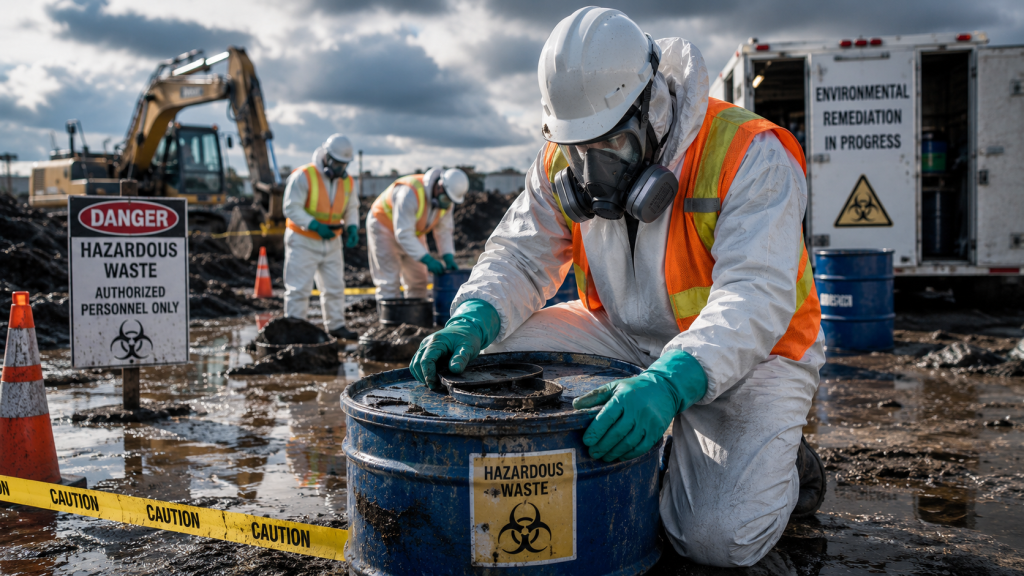
The term HAZWOPER stands for Hazardous Waste Operations and Emergency Response. It refers to OSHA’s comprehensive safety standard found in 29 CFR 1910.120.
The regulation was developed in response to growing concerns about worker safety at hazardous waste sites and environmental cleanup projects. During the 1970s and 1980s, numerous contaminated locations across the United States required large-scale remediation efforts. Workers performing these operations often faced exposure to toxic chemicals, carcinogens, flammable materials, corrosives, and other dangerous substances.
As cleanup efforts expanded, OSHA recognized that traditional workplace safety standards did not adequately address the unique hazards associated with hazardous waste operations. The result was the HAZWOPER standard—a regulation specifically designed to establish training, safety procedures, medical monitoring requirements, and emergency response protocols for workers operating in hazardous environments.
Today, HAZWOPER remains one of OSHA’s most comprehensive and important worker protection standards.
Who Is Covered by OSHA HAZWOPER Requirements?
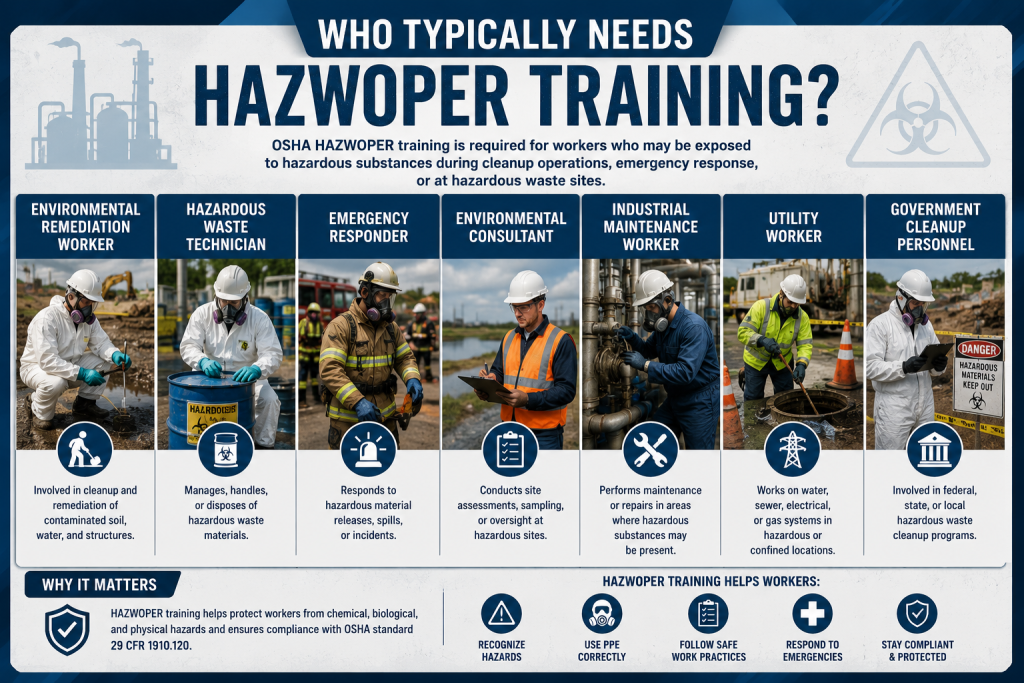
One of the most common misconceptions about HAZWOPER is that it only applies to workers involved in environmental cleanup projects. In reality, the standard covers a much broader range of activities and occupations.
Workers may require HAZWOPER training when their job duties involve hazardous waste sites, treatment and disposal facilities, emergency response operations, or environments where hazardous substances are present. Environmental remediation contractors, hazardous waste technicians, industrial maintenance personnel, utility workers, emergency responders, consultants, and government personnel may all fall within the scope of the regulation depending on their specific duties.
The determining factor is not a worker’s job title but rather the nature of the work being performed and the potential for exposure to hazardous substances.
Employers must evaluate workplace conditions, job responsibilities, anticipated exposures, and site-specific hazards to determine whether HAZWOPER training is required and what level of training is appropriate.
Understanding the Three Main HAZWOPER Training Levels
One of the most confusing aspects of OSHA HAZWOPER requirements is determining which training course is required.
OSHA does not assign training levels based on job titles. Instead, training requirements are determined by anticipated exposure levels, work activities, and responsibilities at the site.
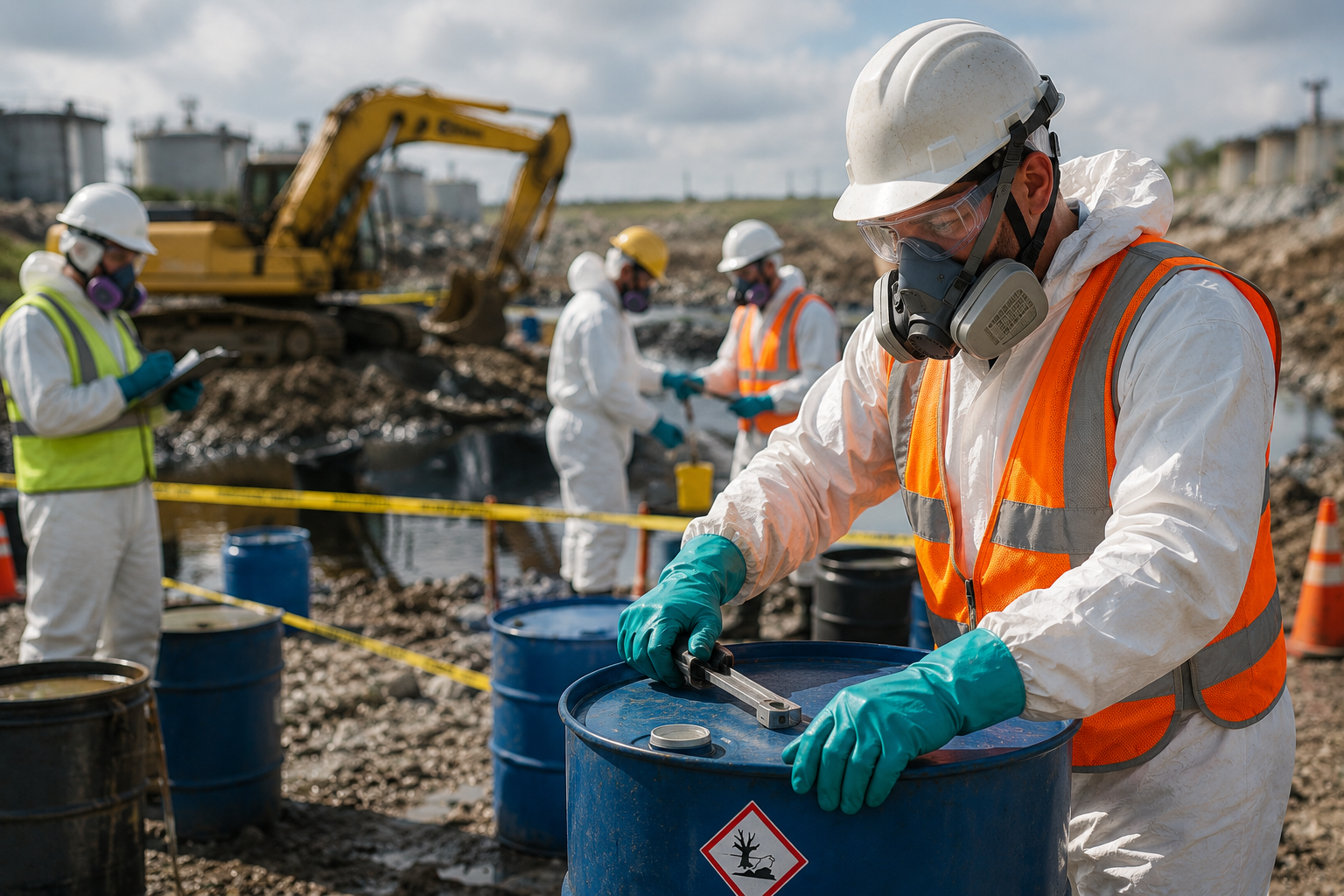
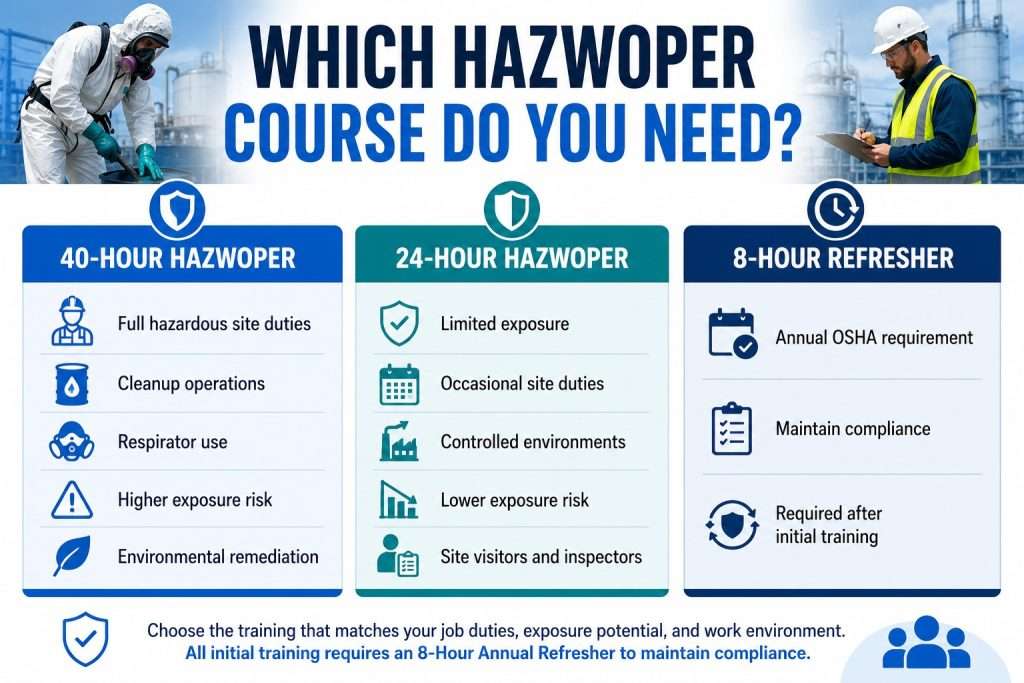
Workers who regularly perform cleanup operations in contaminated areas generally require the most extensive training. OSHA requires these employees to complete 40-Hour HAZWOPER training before performing hazardous waste operations. This training prepares workers to recognize hazards, understand site safety procedures, use protective equipment properly, and respond appropriately to emergencies.
Workers whose duties involve only occasional exposure or limited tasks may qualify for 24-Hour HAZWOPER training. These employees typically work in more controlled environments and face lower exposure risks than general site workers.
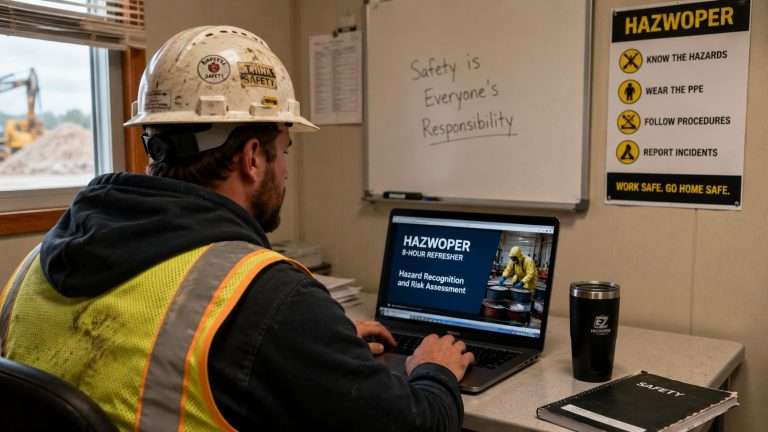
Once initial training has been completed, workers generally must complete annual refresher training to maintain current knowledge and remain compliant with OSHA expectations.
40-Hour vs 24-Hour HAZWOPER: Which Course Do You Need?
Beyond Training: What OSHA Actually Requires
Many employers mistakenly assume that HAZWOPER compliance begins and ends with employee training. While training is a critical component of the regulation, OSHA’s requirements extend much further.
The HAZWOPER standard requires employers to develop comprehensive safety and health programs that address site hazards, emergency procedures, worker protection measures, and ongoing monitoring activities.
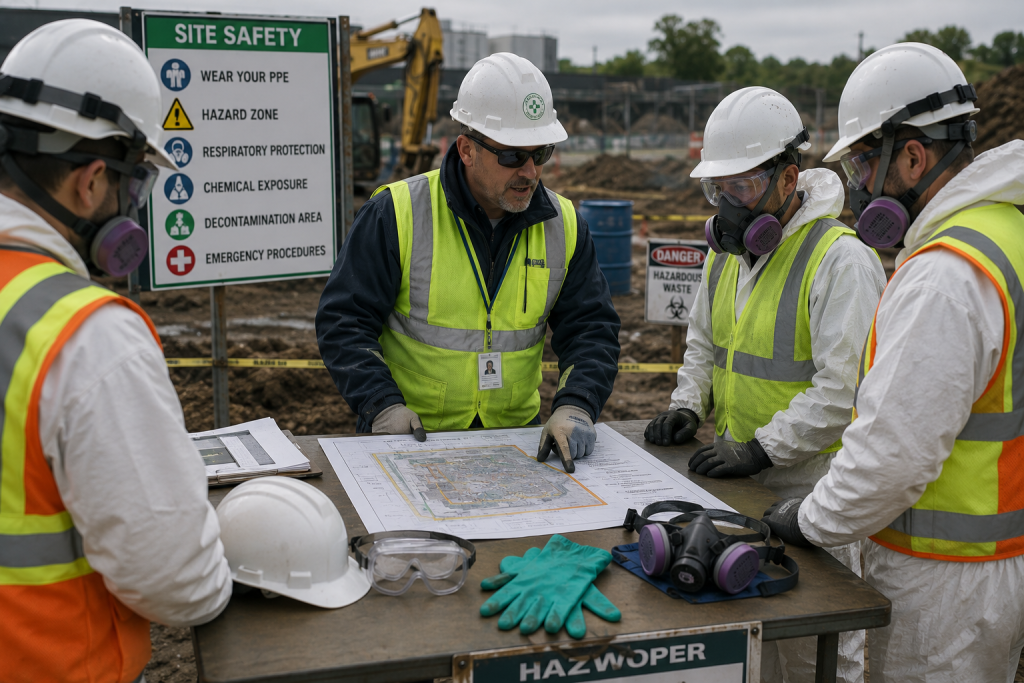
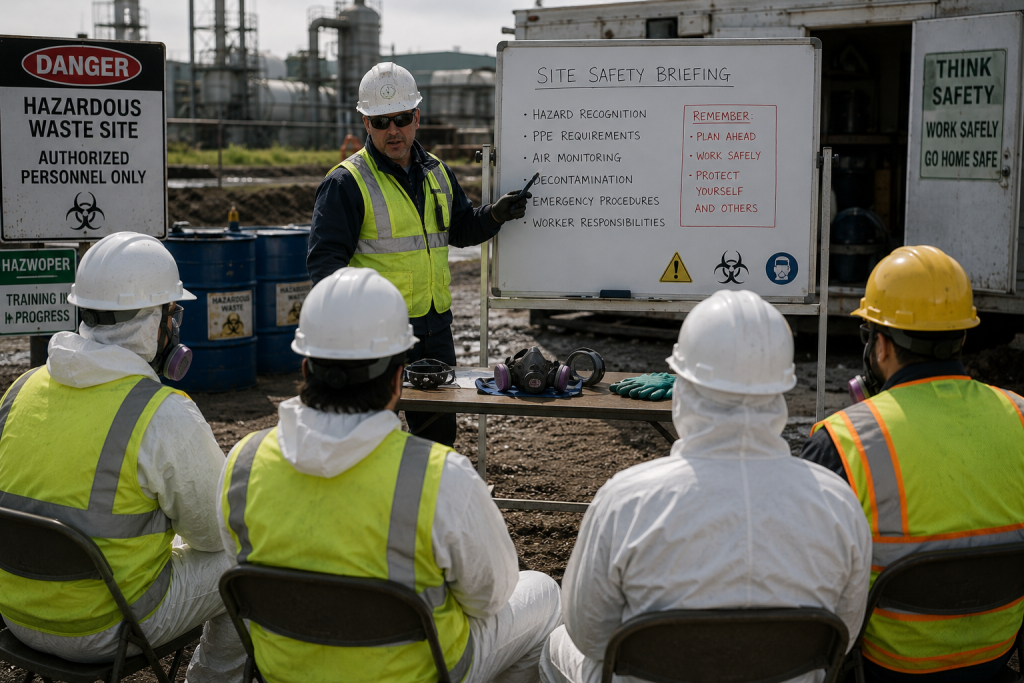
Before workers enter a hazardous waste site, employers must identify hazards, evaluate potential exposures, establish protective measures, and communicate site-specific risks. Written site safety and health plans play a central role in this process. These plans describe hazards that may be encountered, required protective equipment, emergency procedures, decontamination processes, and responsibilities of personnel working on the site.
Employers must also ensure that workers receive proper respiratory protection, medical surveillance when required, exposure monitoring, and site-specific instruction relevant to the work being performed.
In other words, HAZWOPER is not simply a training requirement—it is a comprehensive worker protection program.
Employer Responsibilities Under OSHA 1910.120
The HAZWOPER regulation places significant responsibility on employers. OSHA expects employers to actively manage workplace hazards rather than relying solely on workers to protect themselves.
Employers are responsible for identifying hazards, selecting appropriate personal protective equipment, providing required training, conducting exposure monitoring, maintaining records, and ensuring that workers understand site-specific risks before beginning work.
Training records, medical surveillance records, air monitoring data, and safety plans must all be maintained and updated as necessary. During an OSHA inspection, employers may be asked to demonstrate how they determined training requirements, how hazards were evaluated, and what measures were implemented to protect workers.
Organizations with strong HAZWOPER programs generally experience fewer injuries, better compliance outcomes, and lower liability exposure than those that treat compliance as a paperwork exercise.
Understanding employer responsibilities is only the first step. The checklist below summarizes the key actions organizations should take to help maintain compliance with OSHA HAZWOPER requirements and protect workers from hazardous substance exposures.
OSHA HAZWOPER Employer Compliance Requirements
OSHA's HAZWOPER standard requires employers to implement multiple worker protection measures beyond simply providing training. The table below summarizes some of the most important compliance responsibilities under OSHA 29 CFR 1910.120.
| Requirement | Employer Responsibility |
|---|---|
| Employee Training | ✓ Required |
| Personal Protective Equipment (PPE) | ✓ Required |
| Site Safety & Health Plan | ✓ Required |
| Air Monitoring | ⚠ May Be Required |
| Medical Surveillance | ⚠ May Be Required |
| Annual HAZWOPER Refresher Training | ℹ Generally Required |
Note: Actual employer obligations depend on site conditions, worker duties, potential exposures, respirator use, and other requirements outlined in OSHA 29 CFR 1910.120.
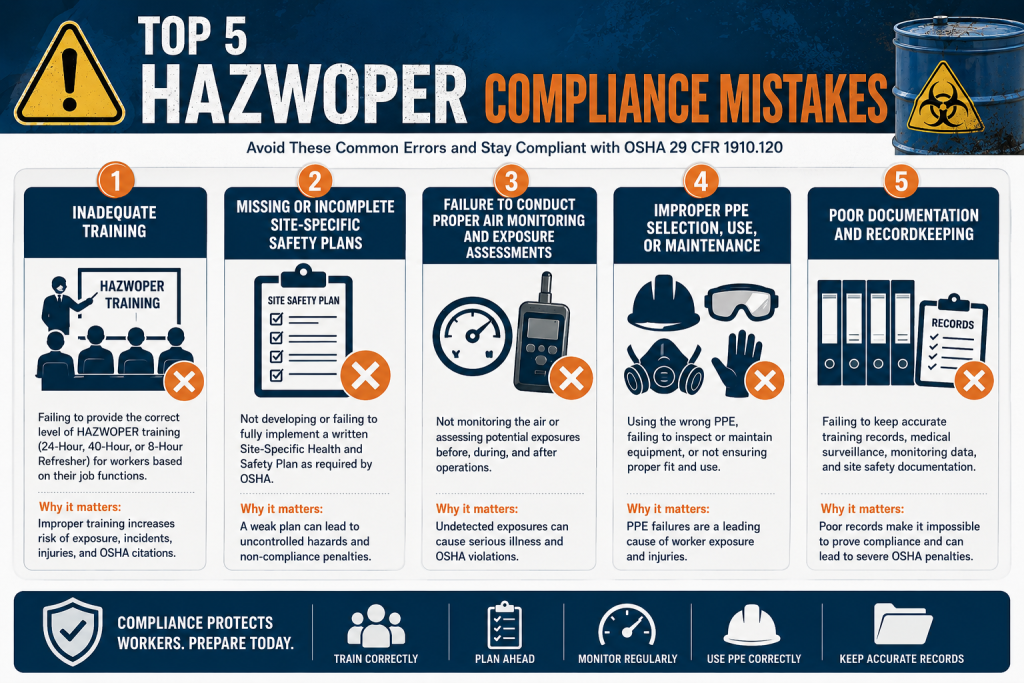
Even when employers understand these requirements, compliance gaps can still occur. The following section highlights some of the most common HAZWOPER compliance mistakes and how organizations can avoid them.
Common HAZWOPER Compliance Mistakes
Even organizations with good intentions sometimes create compliance gaps.
One of the most common mistakes is assigning workers to the wrong training level. Employers occasionally assume that 24-Hour HAZWOPER training is sufficient because it is shorter and less expensive. However, if workers perform duties that require 40-Hour training, the organization may be exposed to significant compliance risks.
Another frequent issue involves refresher training. Workers often complete their initial training and then fail to renew their qualifications annually. Over time, expired training records can create substantial problems during audits, inspections, and contract reviews.
Documentation is another area where organizations frequently struggle. OSHA generally views missing documentation as equivalent to missing training. Employers should maintain organized records and establish systems for tracking expiration dates and refresher requirements.
OSHA HAZWOPER Requirements Checklist for Employers
Maintaining compliance with OSHA's HAZWOPER standard involves more than assigning workers to a training course. Employers must evaluate job duties, identify site hazards, provide appropriate training, maintain records, and ensure workers understand the specific risks they may encounter during hazardous waste operations.
Why this matters: Employers are responsible for protecting workers who may be exposed to hazardous substances during cleanup operations, remediation projects, waste management activities, and emergency response incidents. A structured checklist helps reduce OSHA compliance risks while improving worker safety.
Need HAZWOPER Training?
EZ HAZWOPER offers convenient online training for workers and employers who need to meet OSHA HAZWOPER requirements.
How Long Does HAZWOPER Training Last?
One of the most frequently searched HAZWOPER questions involves training validity.
Workers who complete either 24-Hour or 40-Hour HAZWOPER training are generally expected to complete annual refresher training to maintain compliance and remain current on workplace hazards and regulatory requirements.
Annual refresher training serves an important purpose. Hazardous waste operations evolve over time, new hazards emerge, and workers benefit from periodic reinforcement of critical safety concepts.
Organizations that proactively track refresher deadlines are far more likely to maintain continuous compliance than those that rely on workers to remember renewal dates on their own.
Frequently Asked Questions About OSHA HAZWOPER Requirements
HAZWOPER stands for Hazardous Waste Operations and Emergency Response. It is OSHA's standard for protecting workers involved in hazardous waste operations, environmental cleanup activities, and certain emergency response situations.
Workers who may be exposed to hazardous substances during cleanup operations, waste treatment activities, environmental remediation projects, or emergency response operations may require HAZWOPER training. Employers must evaluate job duties and exposure risks to determine training requirements.
HAZWOPER requirements are contained in OSHA 29 CFR 1910.120, which establishes training, safety, health, medical surveillance, and emergency response requirements for covered workers and employers.
The 40-Hour HAZWOPER course is generally required for workers who regularly perform hazardous waste operations or face significant exposure risks. The 24-Hour HAZWOPER course is intended for workers with more limited exposure and restricted site duties.
The required training level depends on your job duties, work environment, and potential exposure to hazardous substances. Employers are responsible for determining the appropriate training level based on OSHA requirements.
Environmental consultants may require HAZWOPER training if they enter hazardous waste sites, conduct field investigations, collect samples, or perform work where hazardous substance exposure is possible.
Yes. OSHA requires supervisors and managers overseeing hazardous waste operations to receive additional training beyond the worker-level requirements so they can effectively manage site safety and compliance.
Initial HAZWOPER training does not technically expire, but OSHA expects covered workers to complete annual refresher training to maintain current knowledge and remain compliant with employer requirements.
Yes. Workers who have completed 24-Hour or 40-Hour HAZWOPER training are generally required to complete 8-Hour HAZWOPER Refresher Training each year.
Expired refresher training may create compliance issues and could require additional training before returning to covered work. Employers should track refresher deadlines and maintain current training records.
Yes. Many OSHA-compliant HAZWOPER courses are available online, allowing workers to complete training at their own pace. Employers remain responsible for ensuring all applicable OSHA requirements are met.
No. OSHA does not issue HAZWOPER certification cards. Training providers issue certificates of completion documenting that a worker has successfully completed the required training.
Employers must provide required training, conduct hazard assessments, develop site safety and health plans, provide appropriate PPE, implement exposure monitoring programs, maintain records, and ensure workers understand site-specific hazards.
A Site Safety and Health Plan (SSHP) is a written document that identifies site hazards, PPE requirements, emergency procedures, decontamination processes, exposure controls, and worker protection measures for a specific project or location.
In certain situations, yes. Workers who wear respirators, experience significant exposure, or perform specific hazardous waste operations may be required to participate in a medical surveillance program.
Required PPE depends on site conditions and hazards but may include respirators, chemical-resistant gloves, protective suits, eye protection, hard hats, safety boots, and hearing protection.
Yes. Utility workers may require HAZWOPER training if they work in environments where hazardous substances are present or where exposure to contaminated materials is possible.
Industries that commonly require HAZWOPER training include:
- Environmental remediation
- Hazardous waste management
- Emergency response
- Industrial maintenance
- Utilities
- Construction
- Oil and gas
- Chemical manufacturing
- Government cleanup operations
- Environmental consulting
Emergency responders who respond to releases of hazardous substances may require HAZWOPER training depending on their response level and job responsibilities.
Common compliance mistakes include:
- Assigning workers to the wrong training level
- Missing annual refresher training
- Inadequate documentation
- Failure to conduct site-specific training
- Improper PPE selection or use
- Incomplete site safety plans
- Failure to conduct exposure monitoring
Final Thoughts
OSHA HAZWOPER requirements are about much more than completing a training course. The regulation establishes a comprehensive framework for protecting workers who may encounter hazardous substances during cleanup operations, waste management activities, and emergency response incidents.
Understanding who is covered, which training level is required, and what ongoing obligations exist can help both employers and workers avoid costly compliance mistakes while creating safer work environments.
Whether a worker requires 24-Hour HAZWOPER, 40-Hour HAZWOPER, or 8-Hour Annual Refresher training, the goal remains the same: reducing risk, preventing injuries, and ensuring that hazardous operations are conducted safely and responsibly.
Ready to Choose the Right HAZWOPER Course?
Now that you understand the difference between the three main HAZWOPER training paths, the next step is simple: choose the course that fits your role and get started online.
Reviewed by EZ HAZWOPER Safety Training Specialists
EZ HAZWOPER provides online HAZWOPER training for workers, supervisors, contractors, and employers who need to meet OSHA hazardous waste operations and emergency response training requirements. Our content is developed and reviewed by safety training professionals with experience supporting workplace compliance, hazard awareness, and OSHA training programs across multiple industries.